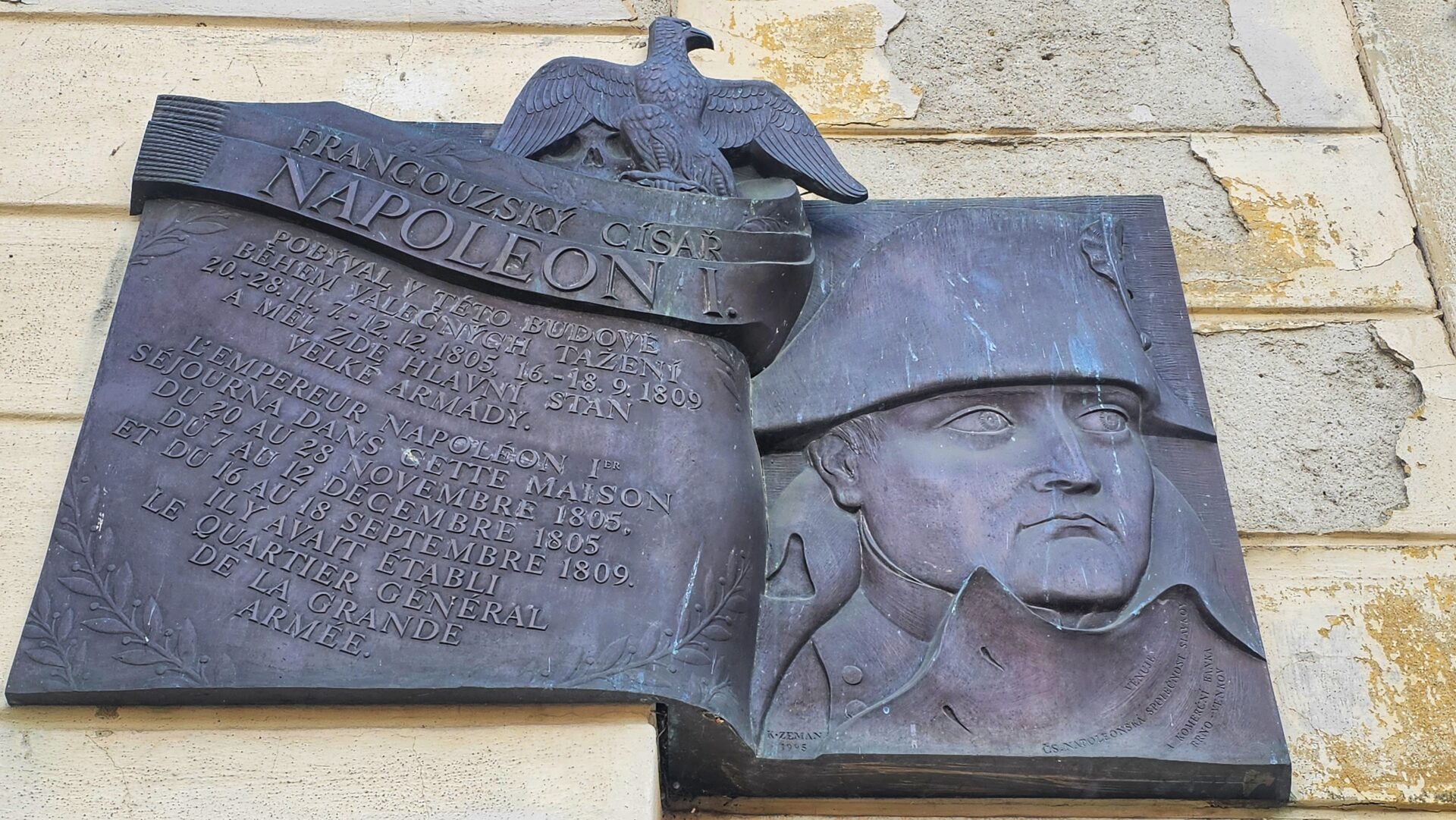

The Battle of Austerlitz is perhaps one of the most famous battles ever fought on Czech soil. Napoleon is often portrayed as a modern-day Alexander the Great, eager to conquer and dominate all of Europe. The truth, however, may lie somewhat elsewhere. Were it not for the long-standing conflict between France and its neighboring states, the assassination of Tsar Paul I, and the hostility of his successor Alexander I Pavlovich, events might have taken a different course.
The battle, named after the town of Austerlitz (Slavkov), though no fighting took place directly there, became a key moment of the Napoleonic Wars. West of Brno, the French army of about 65–75,000 men faced the allies: 75,000 Russians and 16,000 Austro-Hungarian troops. The battle took place on December 2, 1805, though armies had been maneuvering across Moravia since October.
Let’s take a walk through the places connected with the battle and its many memorials scattered across the wide region southeast of Brno – and even within the city itself.
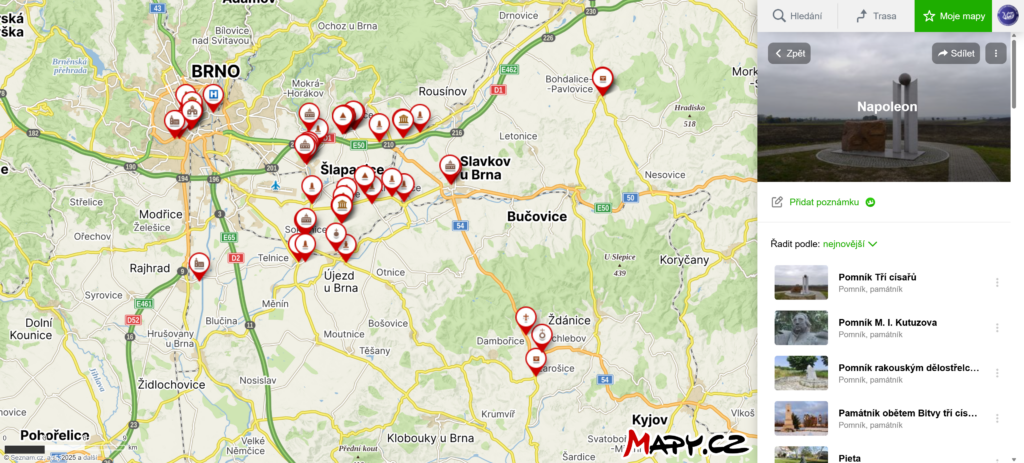
Napoleon’s Road to Moravia
That the decisive battle of the 1805 campaign would take place in Moravia was never planned. After the formation of the Third Coalition — comprising Britain, Russia, Sweden, and Austria — Emperor Napoleon had to abandon his plans for invading England and turn his attention to the continent, where the Russian and Austrian armies were assembling.
Starting in late August, the French army marched across Europe. The first major clash occurred near Ulm, where Napoleon’s forces captured 60,000 Austrians under General Mack. As the French advanced through Austria, they encountered the Russian Podolsk Army led by General Kutuzov, who sought to avoid a direct engagement and wait for reinforcements from both Russia and Austria (the latter coming from Italy).
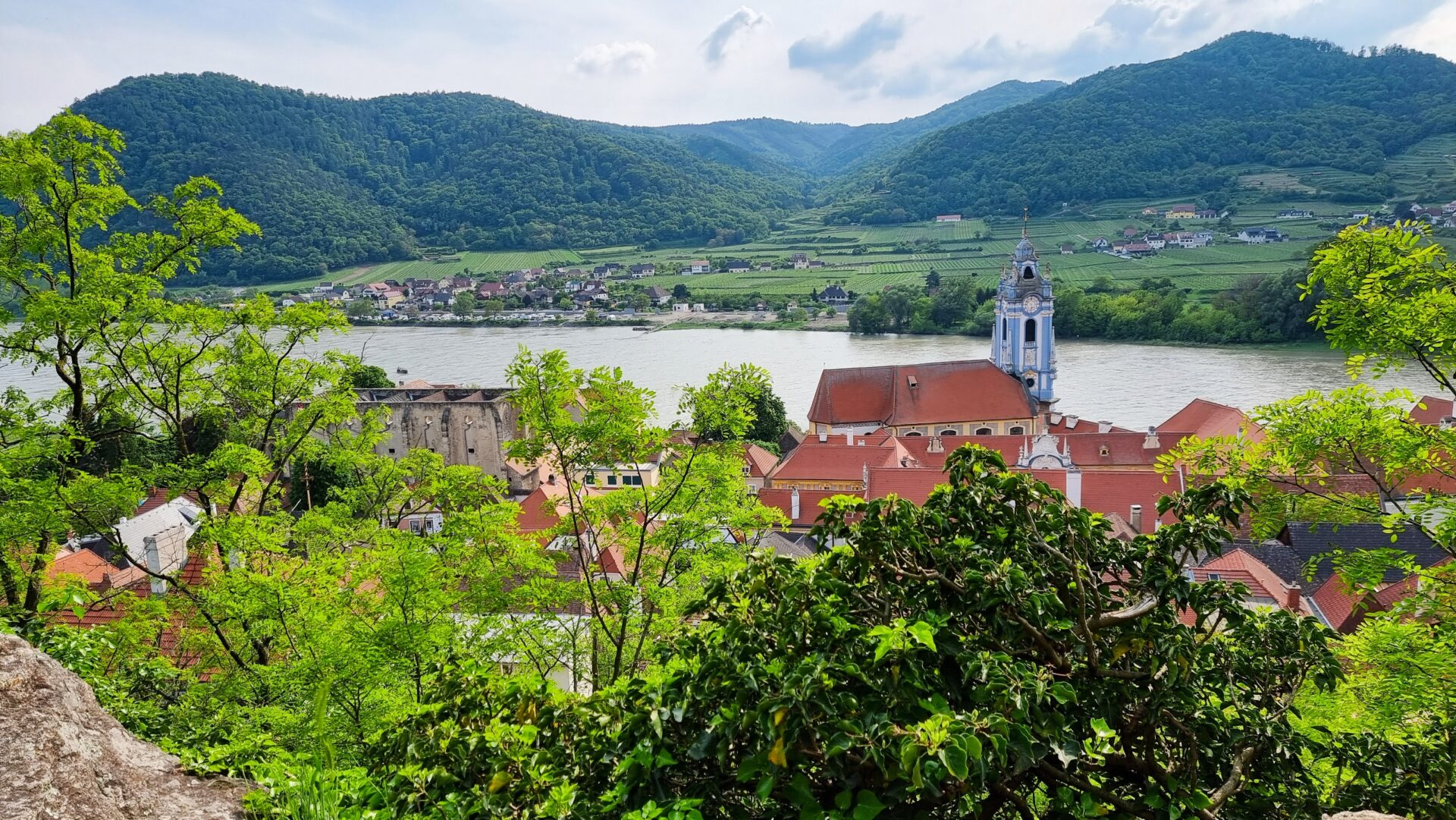
Several smaller battles still took place — for example near Krems, at the town of Dürnstein, or near Hollabrunn. Meanwhile, on November 13, 1805, the French captured Vienna through deception, forcing Emperor Francis I to flee through Brno to Olomouc, where Kutuzov’s army was also retreating. Pursuing them, the French reached southern Moravia, occupied Brno, and their advance guards pressed on as far as Vyškov.
Before the Battle of Austerlitz, Napoleon stayed in Brno
The commander-in-chief of the allied army, General Kutuzov, and his staff spent the nights of October 2–5, 1805, at the Dietrichstein Palace on Zelný trh (Cabbage Market). A white commemorative plaque on the palace wall still honors him today.
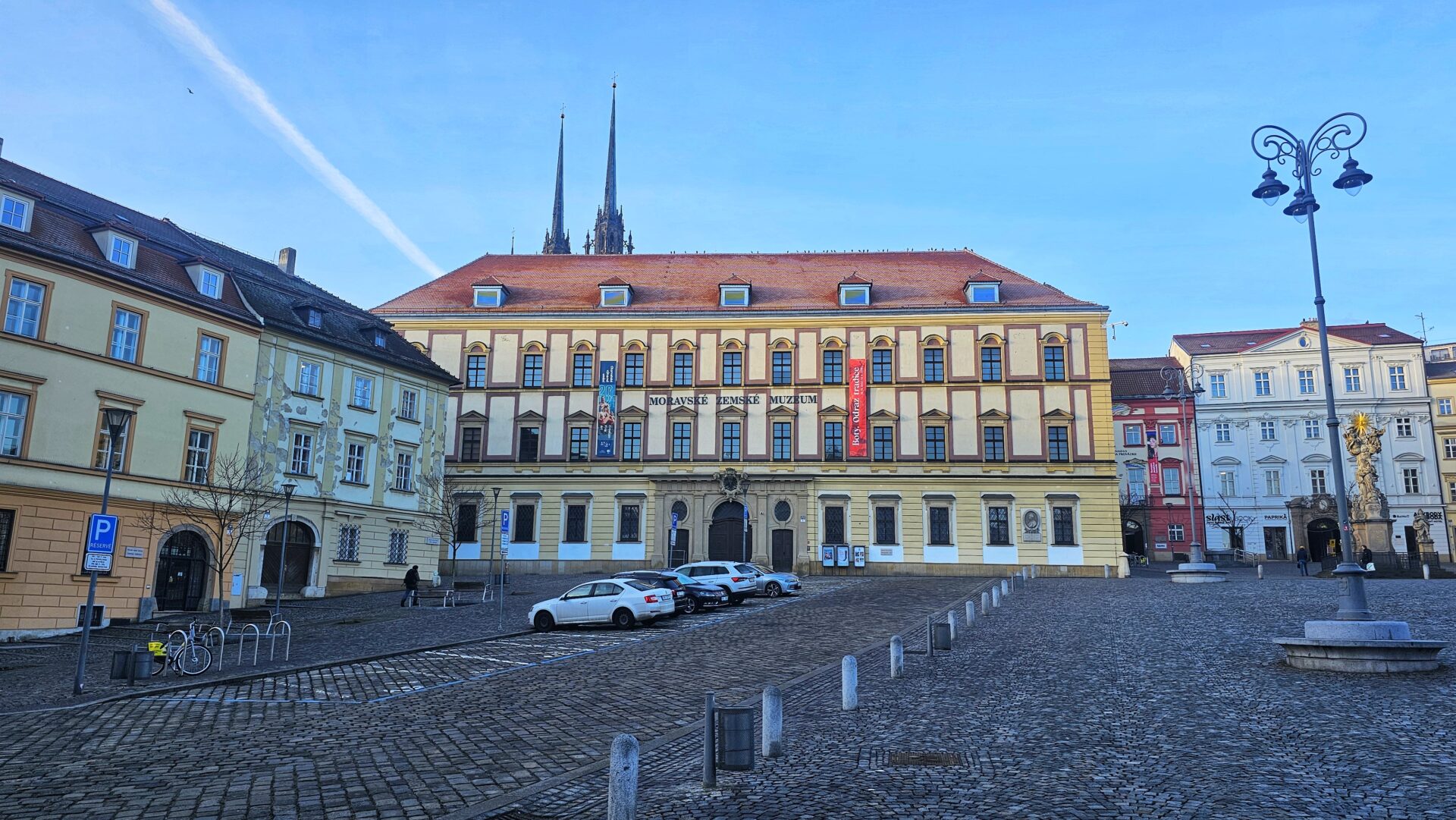
Brno, Dietrichstein Palace
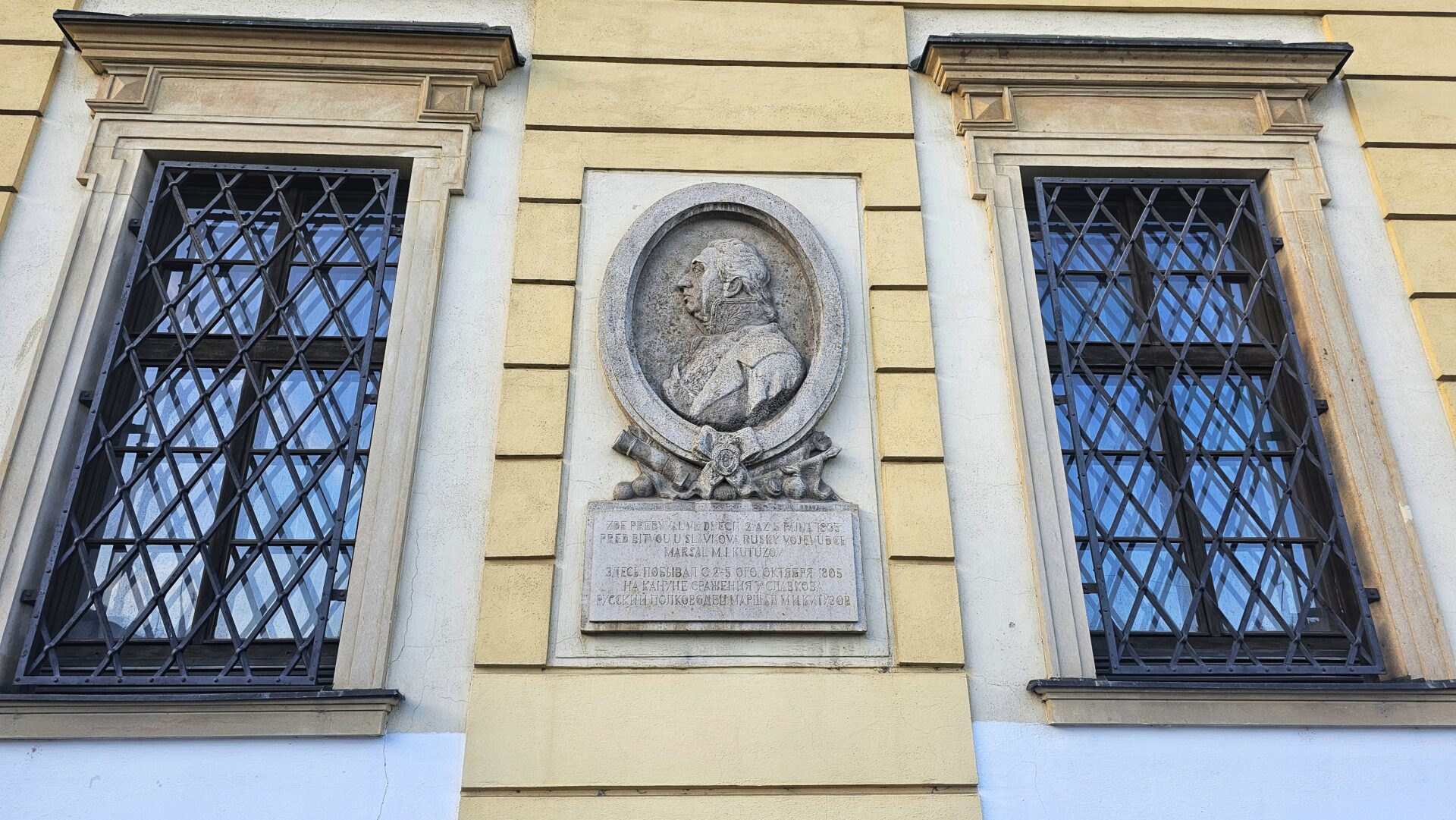
Between November 17 and 19, General Kutuzov and the headquarters of the allied army were stationed at a manor house in Šlapanice. On November 20, they withdrew, along with Field Marshal Prince Liechtenstein, commander of the allied cavalry. By then, French troops had already entered Brno.
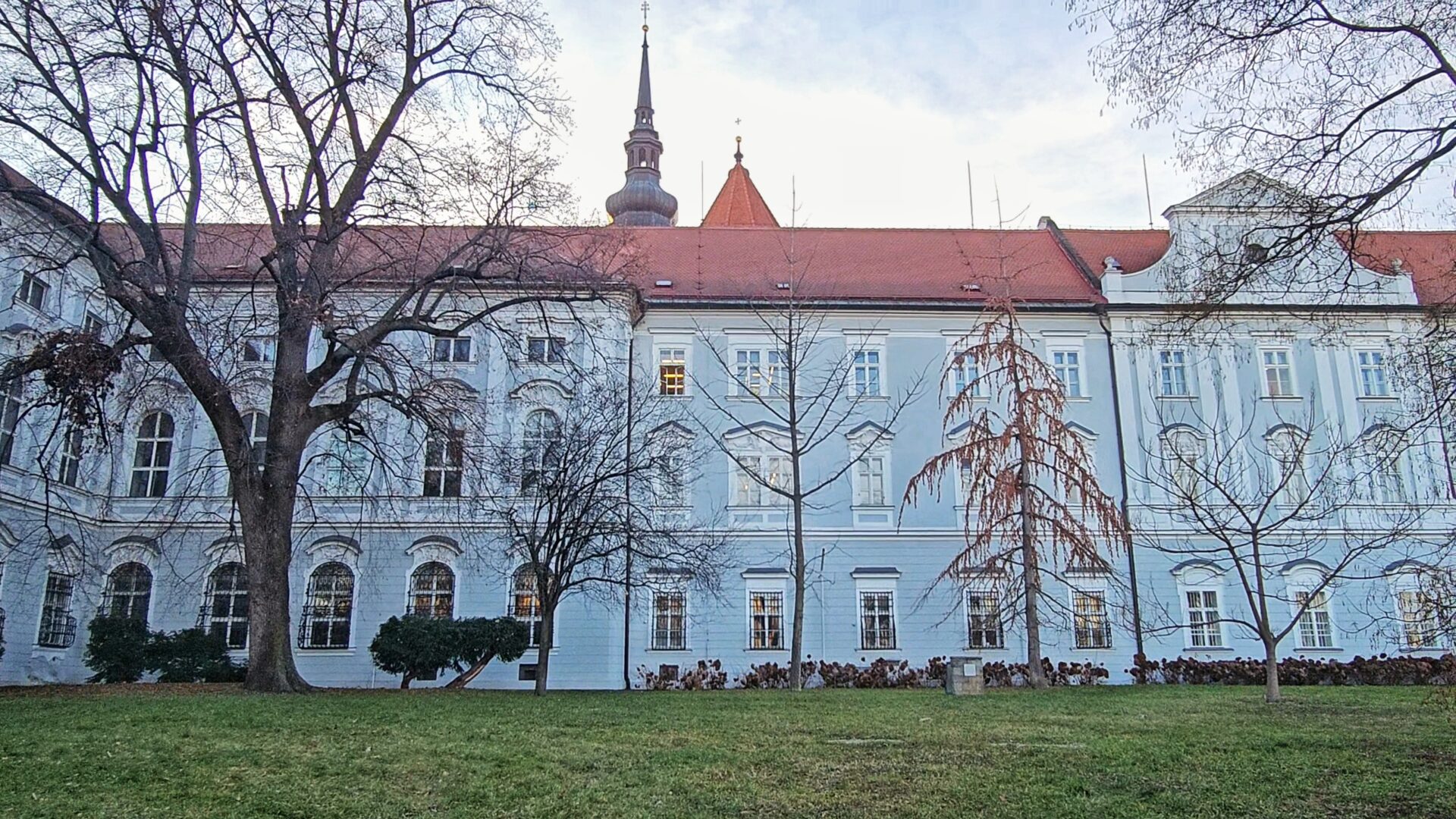
The French cavalry units under Marshal Murat rode into the city through the Brno Gate (at the end of today’s Pekařská Street) on November 19 and took control within minutes. The next day, Emperor Napoleon I himself entered Brno in triumph. He chose the Governor’s Palace (Místodržitelský palác) as his temporary residence — the same building Emperor Francis I had hurriedly vacated only two days earlier as the French approached.
Originally a 14th-century monastery, the complex had been rebuilt in the Baroque style between 1732 and 1752 by architect Mořic Grimm. Since 1783 it had served as the seat of regional administration and was renamed the “Dikasterial Palace.” It became Napoleon’s headquarters and the command center of the French army.
The city had to accommodate a massive army, which caused much hardship for the locals. The Cabbage Market, where meat stalls once stood along what is now Květinářská Street, turned into a huge open-air slaughterhouse. Feeding the army was no easy task — the city officials had to supply 26,000 pounds of meat, roughly equal to 23 cows.
From November 21, Napoleon set out daily to reconnoiter the terrain of the future battlefield southeast of Brno, returning only after dark. To make it easier for him to navigate the city, he ordered two candles to be lit in every window. By late November, the French army began its final march toward the battlefield.
Napoleon’s Second Visit to Brno
After the glorious Battle of Austerlitz in 1805, Napoleon returned to Brno once more — in 1809. At that time, he was still at the height of his power, and Europe remained under the shadow of his campaigns. Which battles did he fight then, what were their consequences, and what ultimately led to his downfall? You’ll find out in the next video.
The Battle of Austerlitz and the Mystery of Dates
An interesting historical curiosity is that each side recorded the battle on a different date.
-
The Russians, using the Julian calendar, fought on November 20.
-
The Austrians, using the Gregorian calendar (still in use today), marked it as December 2, 1805, a Monday.
-
The French employed their Revolutionary calendar, dating the battle to 11 Frimaire, Year XIV.
From January 1, 1806, the French Empire returned to the Gregorian system.
Join us as we explore not only the events leading up to the battle, but also the fateful day itself — and the monuments that still commemorate the Battle of Austerlitz today.
Next episodes in the series:
-
Battle of Austerlitz 1805 – A Walk Through the Battlefield II.
-
Battle of Austerlitz 1805 – A Walk Through the Battlefield III.
-
Battle of Austerlitz 1805 – A Walk Through the Battlefield IV.
Our YouTube video offers a fascinating look at one of the most significant battles of the Napoleonic Wars — the Battle of Austerlitz (the Battle of the Three Emperors). It traces the events before and during the battle, its key moments, and its impact on European history. Viewers will discover the places tied to it — such as Austerlitz Castle, Pratzen Heights, and Brno — as well as the major figures: Napoleon Bonaparte, Tsar Alexander I, Emperor Francis I, and General Kutuzov.