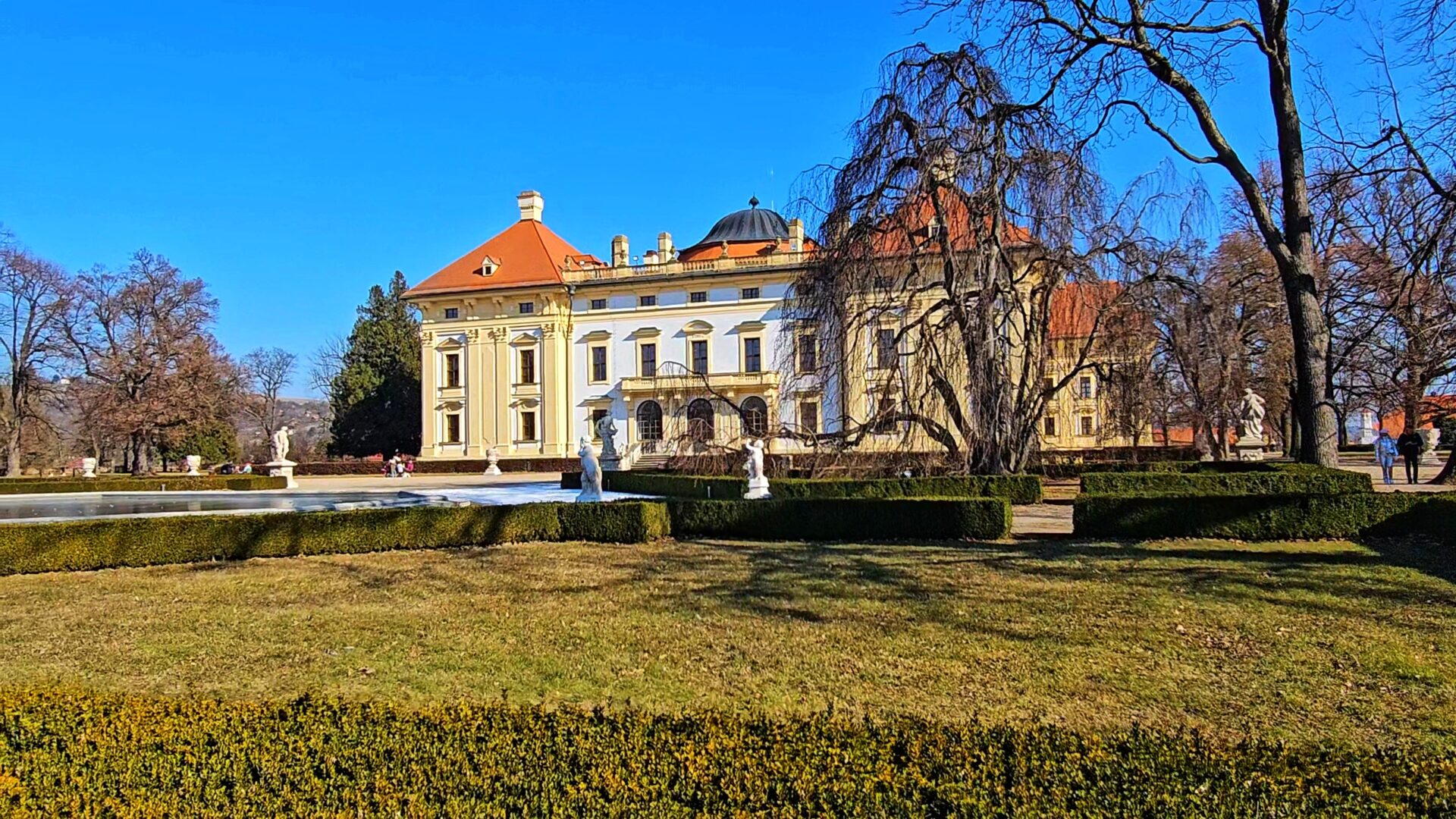

The Battle of Austerlitz ended in the defeat of the Allied forces. What happened in the following days of December 1805, and how the peace negotiations reshaped the political map of Europe, is revealed in this continuation of our mini-series about the Battle of Slavkov.
After the Battle of Austerlitz
The opposing armies at the beginning of the Battle of Austerlitz were slightly unevenly matched. The French Grande Armée numbered between 65,000 and 75,000 men, with some divisions arriving only shortly after the first shots at Telnice. The French deployment included about 605 staff officers, 58,000 infantry, 11,500 cavalry, and 4,200 artillerymen and members of the military supply section operating 157 cannons.
They faced approximately 75,000 Russians and 16,000 Austrians. Under the command of Tsar Alexander I, the Russian army fielded around 50,000 infantry, 14,000 horsemen, and 7,800 artillery and members of the military supply section with 318 guns. Emperor Francis I of Austria commanded about 11,000 infantrymen, 3,000 cavalry, and 1,700 artillerymen and members of the military supply section with 70 guns.
Despite this disparity of forces, French losses were significantly lower than those of the Allies. The Russian army suffered about 16,000 killed and wounded, with another 9,500 taken prisoner. The Austrian army lost around 600 dead and 1,200 wounded, and about 1,670 soldiers were captured. The French army recorded 1,305 dead, 7,260 wounded, and between 94 and 532 prisoners.
The Wounded and Captured
The entire battlefield of the Battle of Austerlitz was covered with the dead, who were later buried in twenty-two mass graves. During the battle, French wounded were transported to Šlapanice, and after treatment, those who could be moved continued on to Brno.
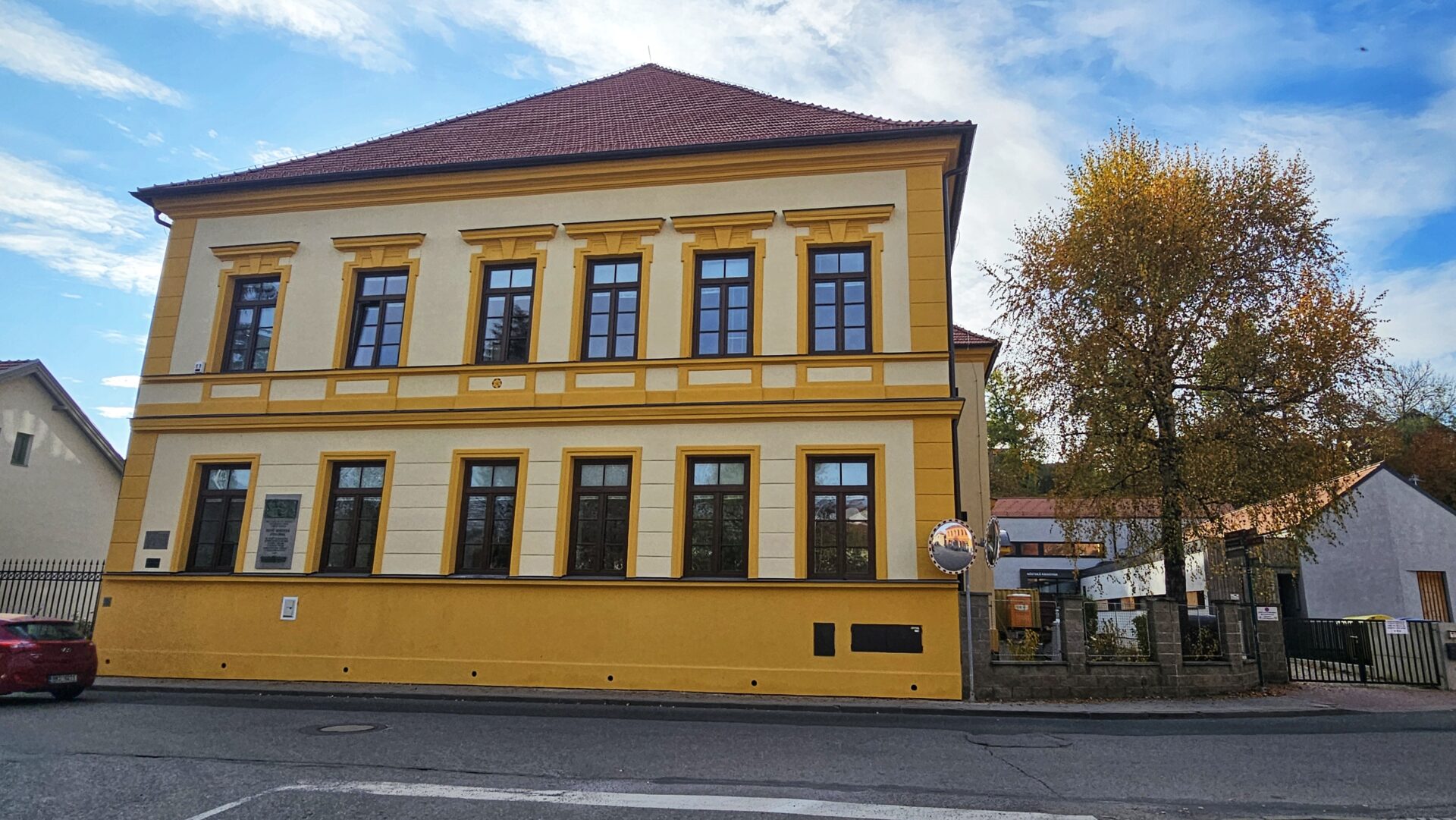
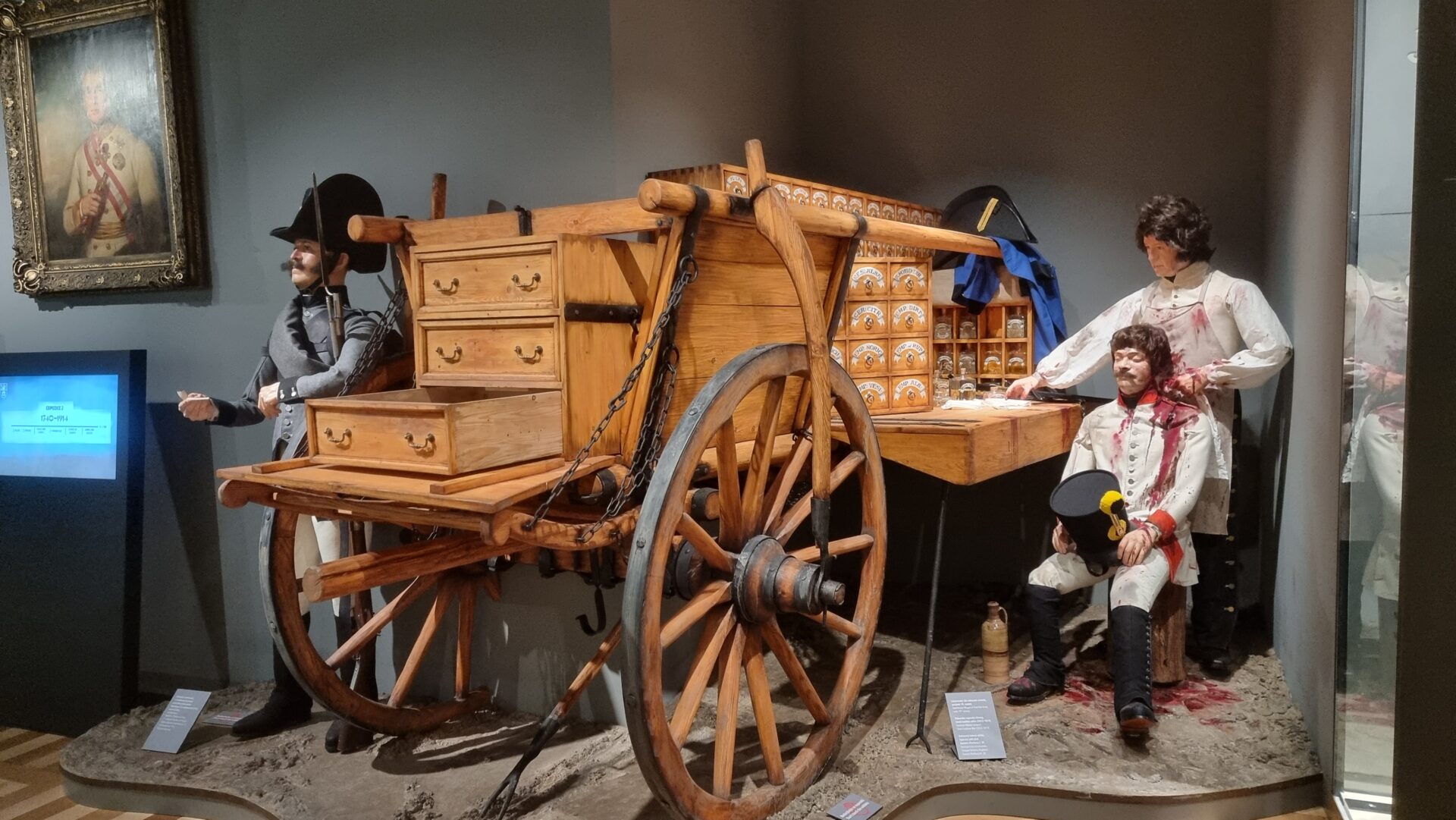
In Šlapanice, two large buildings served military doctors — the monastic scholasterium and the Blümegen château, both converted into field hospitals and dressing stations. Those too severely wounded to be moved stayed in the château hospital. On the morning of December 3, there were 190 patients, most after amputations, a drastic but common procedure to prevent gangrene from contaminated wounds.
Surgeon-in-chief of the Imperial Guard, Jean Dominique Larrey, fand his colleagues managed to amputate a limb in an unimaginable two to four minutes, without the use of anesthesia. The options for pain relief were limited to cold application, opium tinctures, or alcohol.
In Brno and its surroundings, countless places were used to treat the wounded. Hospitals and monasteries were full: the Brothers of Mercy monastery, the St. Elizabeth convent, the military hospital in Zábrdovice. Even churches, factories, and private houses were turned into temporary wards. The Reduta Theatre was converted first into a Russian prisoner camp, later into a French military hospital. The Benedictine monastery in Rajhrad also hosted the wounded, who remained there until February 1806.
Some Austrian and Russian soldiers were transferred to the Podstatský family château in Veselíčko near Přerov.
Russian prisoners were confined in various places — about 400 in the church of Šlapanice, and others in Brno’s St. Peter and Paul Cathedral, where they reportedly burned church benches for warmth.
The overcrowding and poor hygiene soon sparked a typhus epidemic in Brno that killed many soldiers and civilians alike. The typhus subsided only with the onset of winter frost around Christmas.
The Fate of General Valhubert
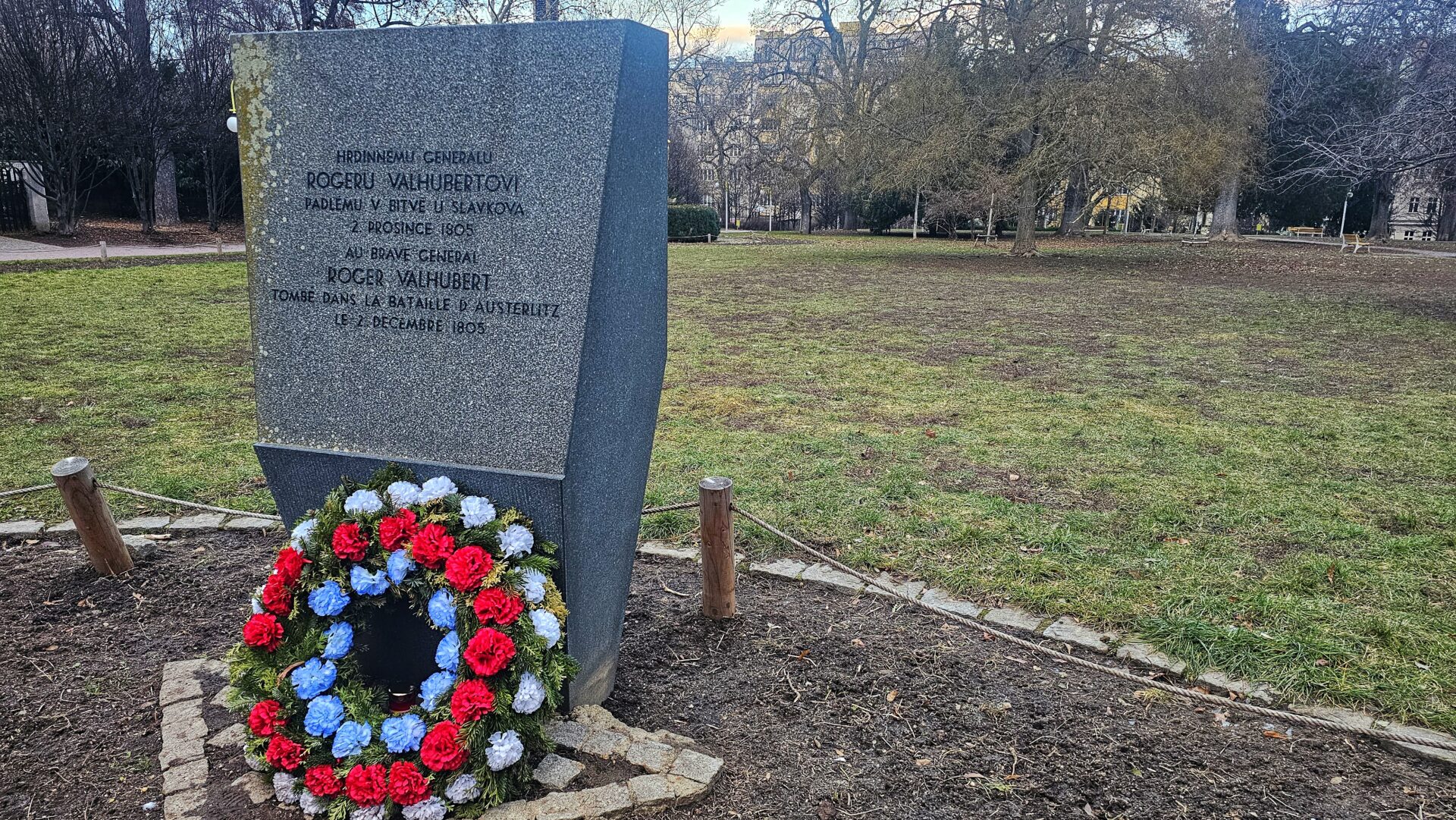
French Brigadier General Jean Marie Mellon Roger Valhubert was gravely wounded by a shell fragment in the thigh during the Battle of Austerlitz, near Santon Hill by Tvarožná.
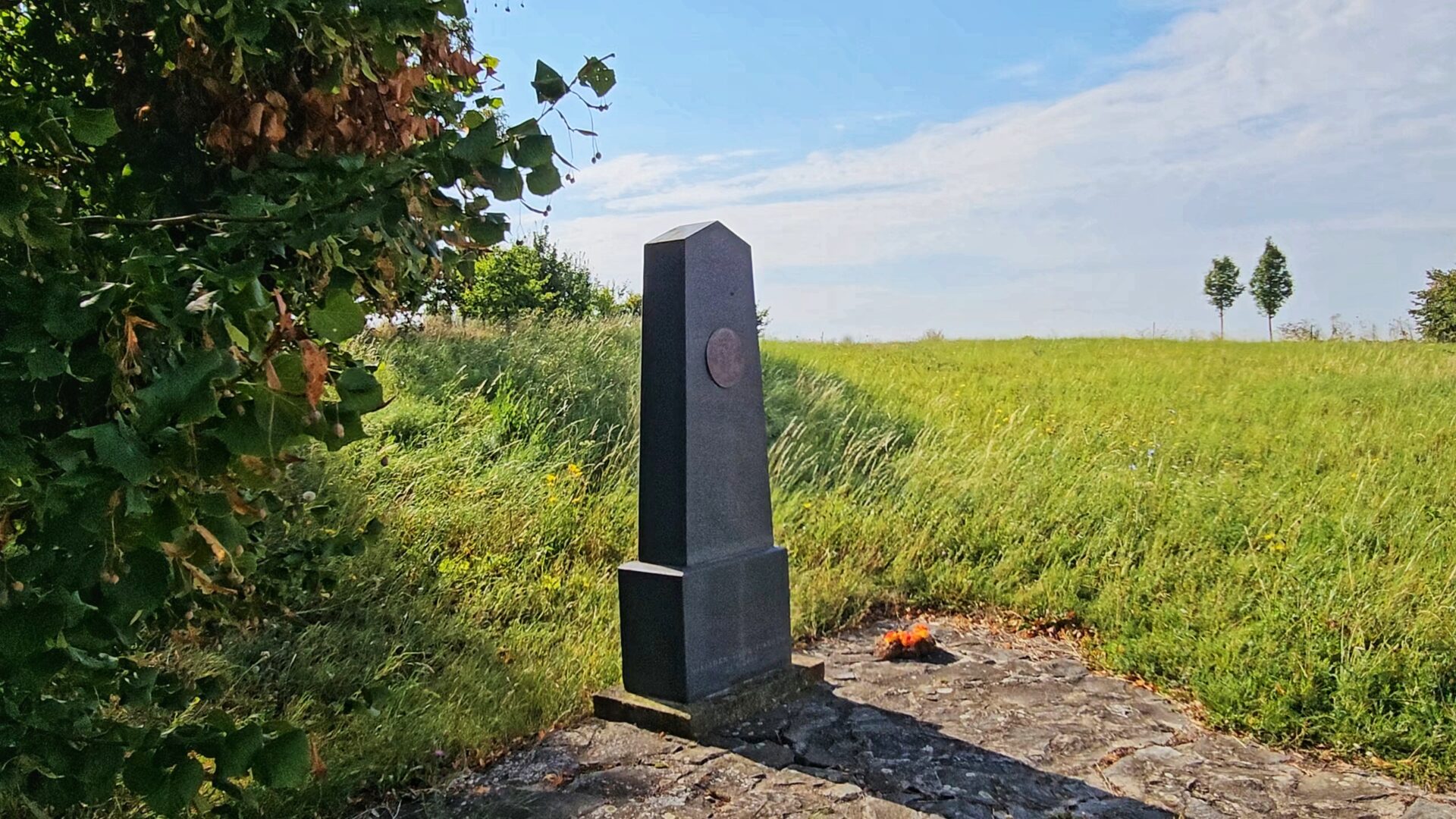
He was first carried to the château in Šlapanice and later moved to Brno, where he died in a house at today’s Orlí 14. His funeral was held on December 8, 1805, at St. James’s Church, and he was buried at the Brno City Cemetery on present-day Kounicova Street (removed in 1883; now Tyrš Park). Memorials at both the battlefield and Tyrš Park commemorate this Napoleonic general.
The Night After the Battle
The shattered Russian army, along with Tsar Alexander I, retreated slowly toward Hodonín and across the Morava River into Hungary. General Bagration withdrew toward Rousínov, pursued by Lannes’s and Murat’s cavalry. As darkness fell, Bagration executed a skillful maneuver, turning sharply south toward Slavkov. His fourth column and Imperial Guard successfully passed through the town. Due to the darkness, Lannes and Murat did not notice the diversion and continued toward Rousínov.
That night, Emperor Francis I of Austria stayed at the Vrchnostenský Official House in Žarošice, while Tsar Alexander I lodged with Isidor Valy, a quarter-farmer in Žarošice No. 45, and six generals took quarters at the local rectory.
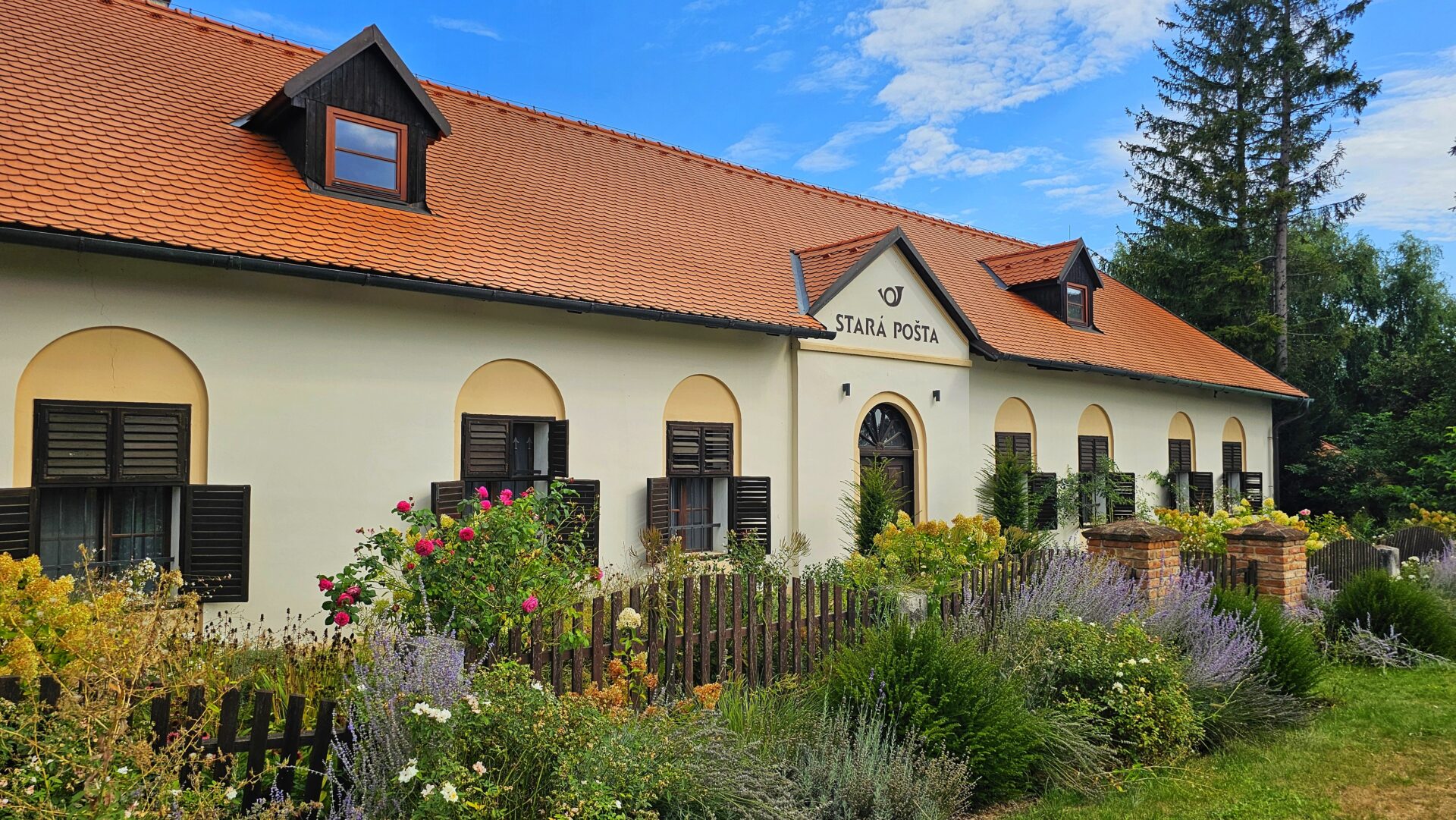
Napoleon Bonaparte, after inspecting the darkened battlefield of Austerlitz, spent the night at the Old Post near Pozořice. The next day, he moved into the Austerlitz Château, where his adversaries, Alexander I and Francis I, had stayed before the battle. There, he dictated his proclamation to the army and several letters to France. Around 4 p.m., he received Prince Johann of Liechtenstein, who came to discuss a separate peace agreement on behalf of Emperor Francis I.
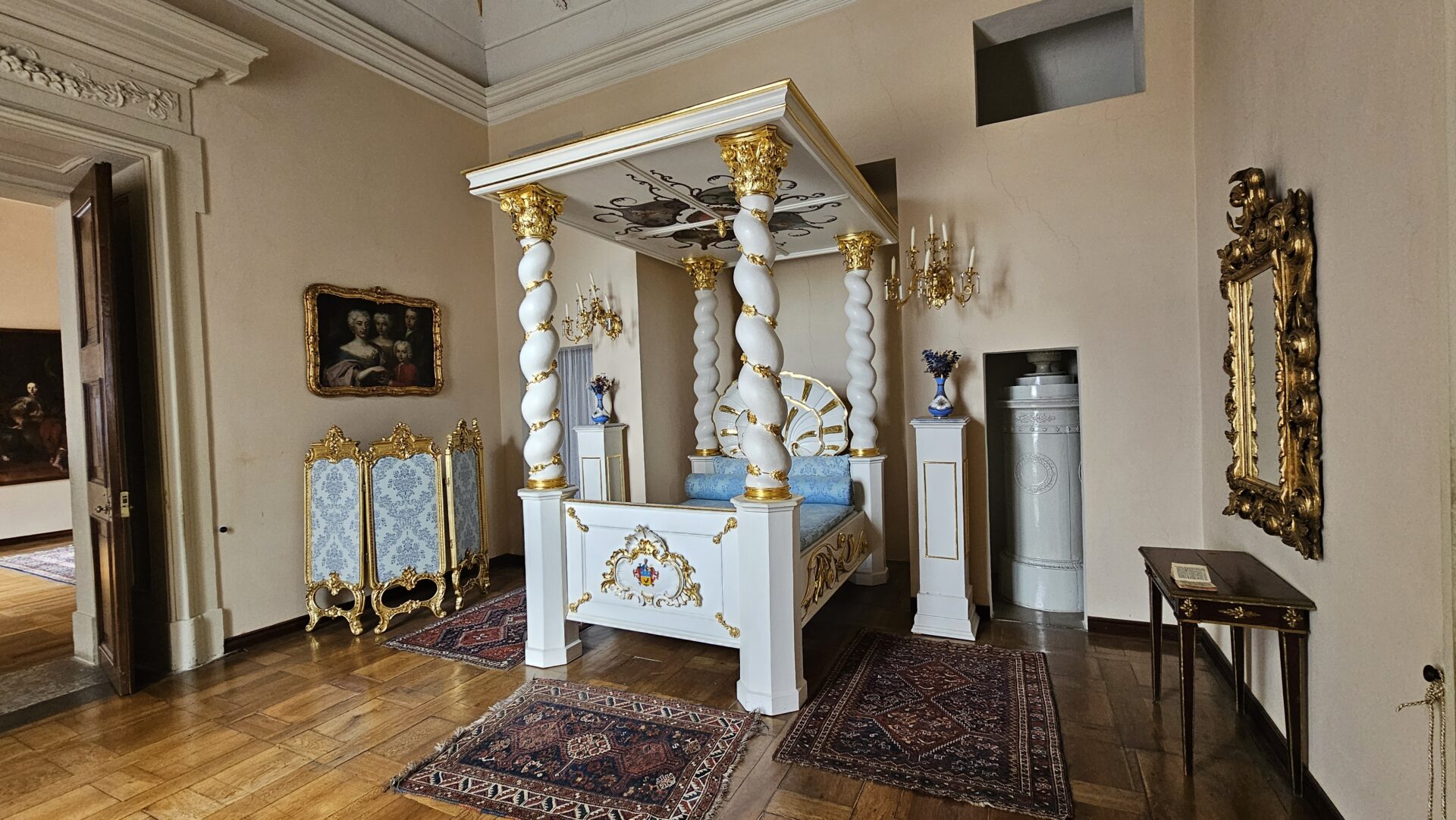
The white bed displayed in the château as “Napoleon’s bed” is, however, a later legend. In reality, the Emperor slept on his field cot in a different room, nearer to the main staircase.
Peace Negotiations
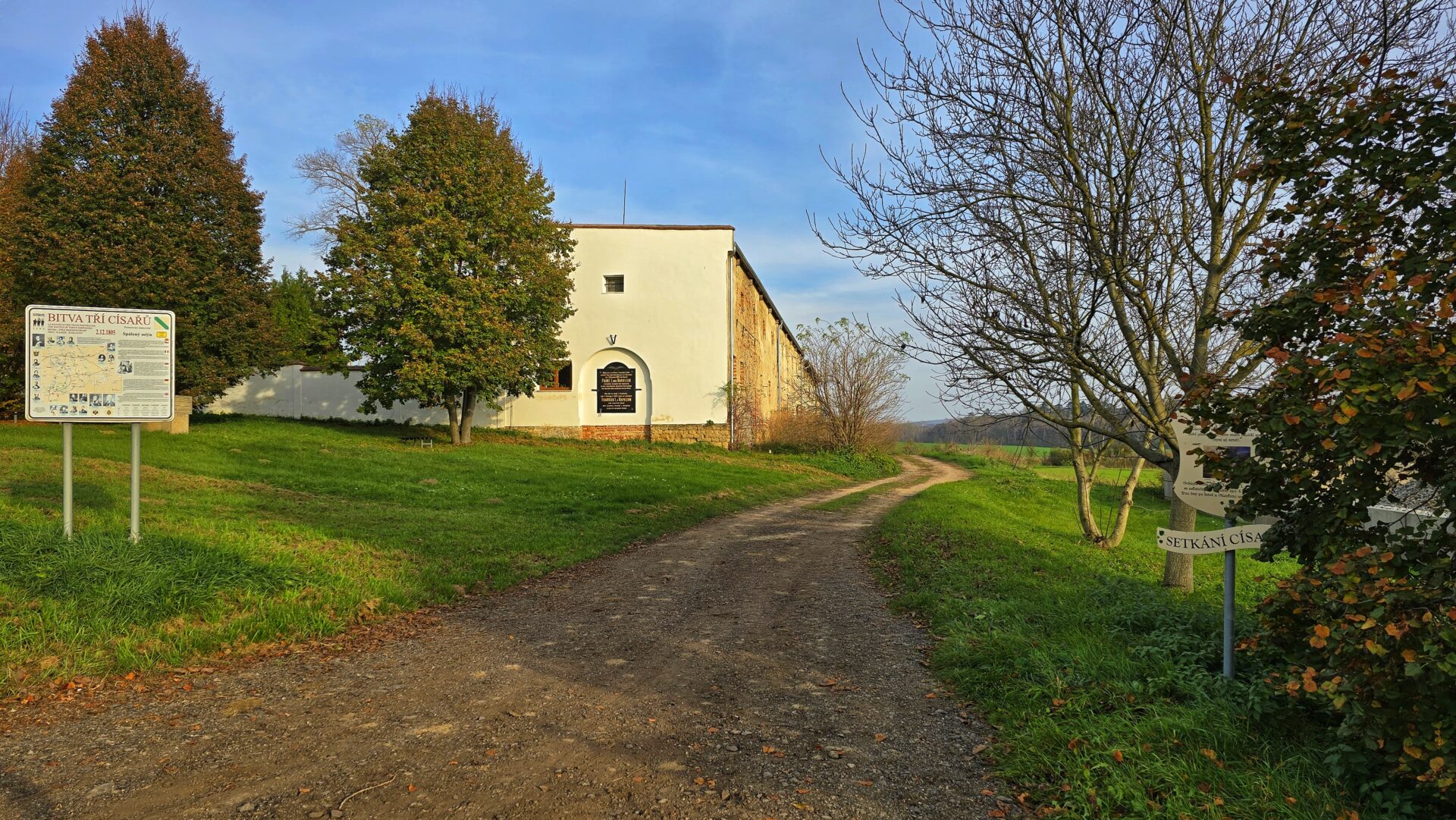
On December 4, Napoleon and Emperor Francis I met on neutral ground near the Spálený Mill by Násedlovice. They spoke privately, accompanied only by their aides — Prince Liechtenstein for Austria, and Marshal Berthier for Napoleon. The armistice agreed upon here was officially signed two days later, on December 6, 1805, at the Slavkov Château.
Further peace talks were held in Brno, but due to the typhus epidemic, they were moved to Pressburg (today Bratislava). The final treaty was signed on December 26, 1805, in the Primate’s Palace, entering history as the Peace of Pressburg.
Following the Battle of Austerlitz and this peace, Austria lost significant territories in Italy and Germany — altogether 63,000 square kilometers with nearly three million inhabitants. Among them were Tyrol, Vorarlberg, and Augsburg (given to Bavaria), and Venetia, Istria, and Dalmatia, which formed part of the newly created Kingdom of Italy under Napoleon’s control. Austria also renounced all claims to the German states, though it was compensated with Salzburg and obliged to pay 40 million francs in reparations to France.
Nine months later, on August 6, 1806, the Holy Roman Empire was dissolved. Emperor Francis II became simply Francis I of Austria, retaining only that title. Tsar Alexander I refused to sign peace with Napoleon, and Russian troops withdrew back to Russia.
The Battle of Austerlitz in Literature
Many books have been written about the Battle of Austerlitz — from detailed military analyses to the memoirs of participants. The battle also entered world literature. In Leo Tolstoy’s monumental novel War and Peace, the Battle of Austerlitz is vividly described as one of its central events.
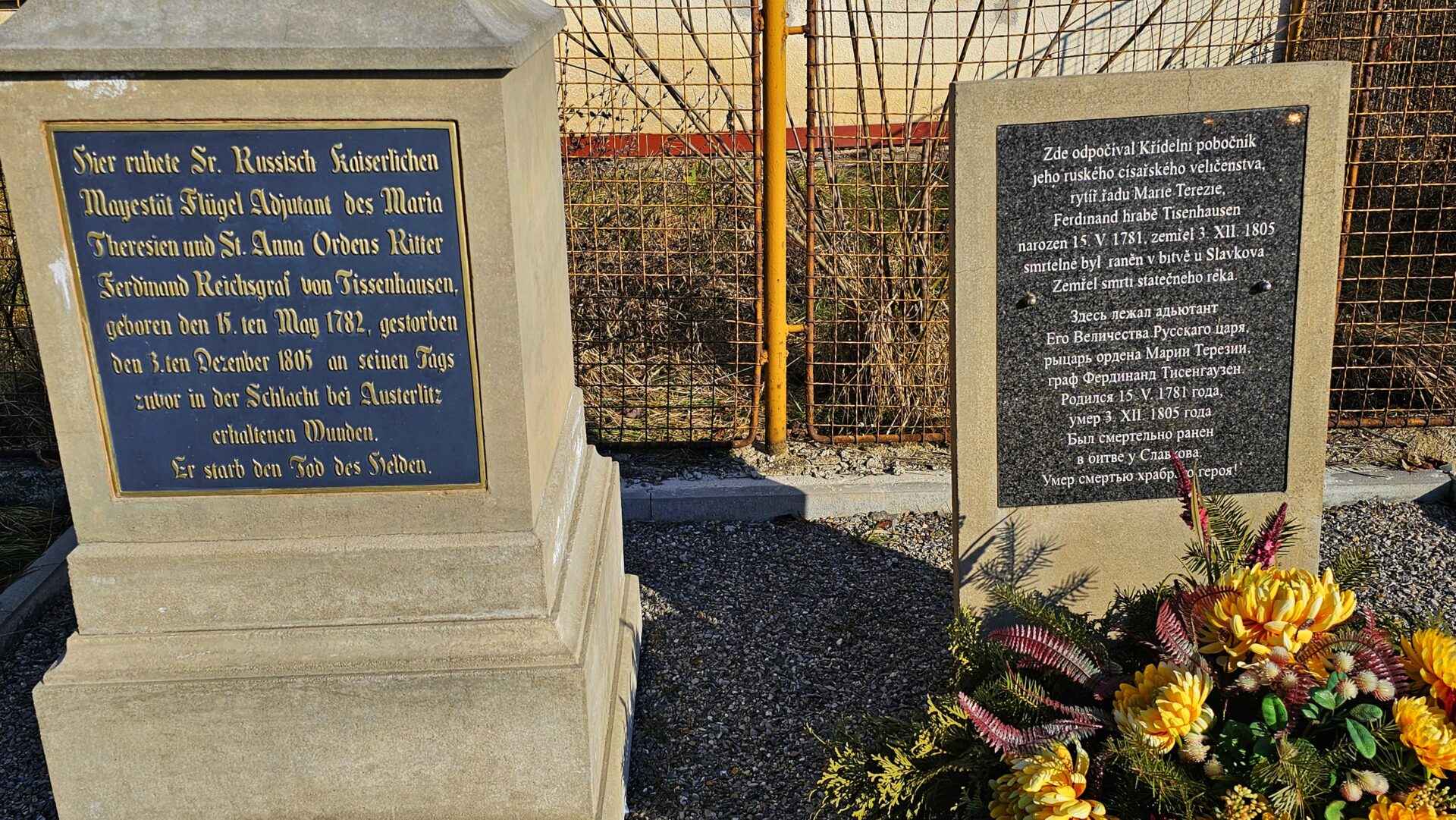
One real-life figure, Count Ferdinand von Tiesenhausen, inspired the character of Prince Andrei Bolkonsky. A member of an old Baltic noble family, Tiesenhausen served as aide-de-camp to Tsar Alexander I and was also Kutuzov’s son-in-law. Wounded during the Battle of Austerlitz, he died in an inn in Silničná near Žarošice, where he was first buried. His remains were later transferred to his homeland and interred in the cathedral of Tallinn.
Thus ends this somber chapter of the Battle of Austerlitz. In the final part of our mini-series, we will explore the memorials, monuments, and places of remembrance connected with this historic battle.
Next episodes in the series:
-
Battle of Austerlitz 1805 – A Walk Through the Battlefield I.
-
Battle of Austerlitz 1805 – A Walk Through the Battlefield II.
-
Battle of Austerlitz 1805 – A Walk Through the Battlefield IV.
Our YouTube video offers a fascinating look at one of the most significant battles of the Napoleonic Wars — the Battle of Austerlitz (the Battle of the Three Emperors). It traces the events before and during the battle, its key moments, and its impact on European history. Viewers will discover the places tied to it — such as Austerlitz Castle, Pratzen Heights, and Brno — as well as the major figures: Napoleon Bonaparte, Tsar Alexander I, Emperor Francis I, and General Kutuzov.